
Trézor.io/Start — Starting Up™ Your Device | Trezor
Trezor.io/start provides a simple way to begin Trezor wallet setup while managing crypto, sending and receiving funds, tracking prices, and more.
Trezor.io/start: Safe and Simple Wallet Setup
Cryptocurrency ownership comes with an important responsibility: keeping access to your digital assets protected. Trezor.io/start provides the official starting point for setting up a Trezor hardware wallet. Users can download Trezor Suite, connect their device, complete the guided setup, create a wallet backup, and prepare to move supported crypto into self-custody.
Getting Started With Trezor.io/start
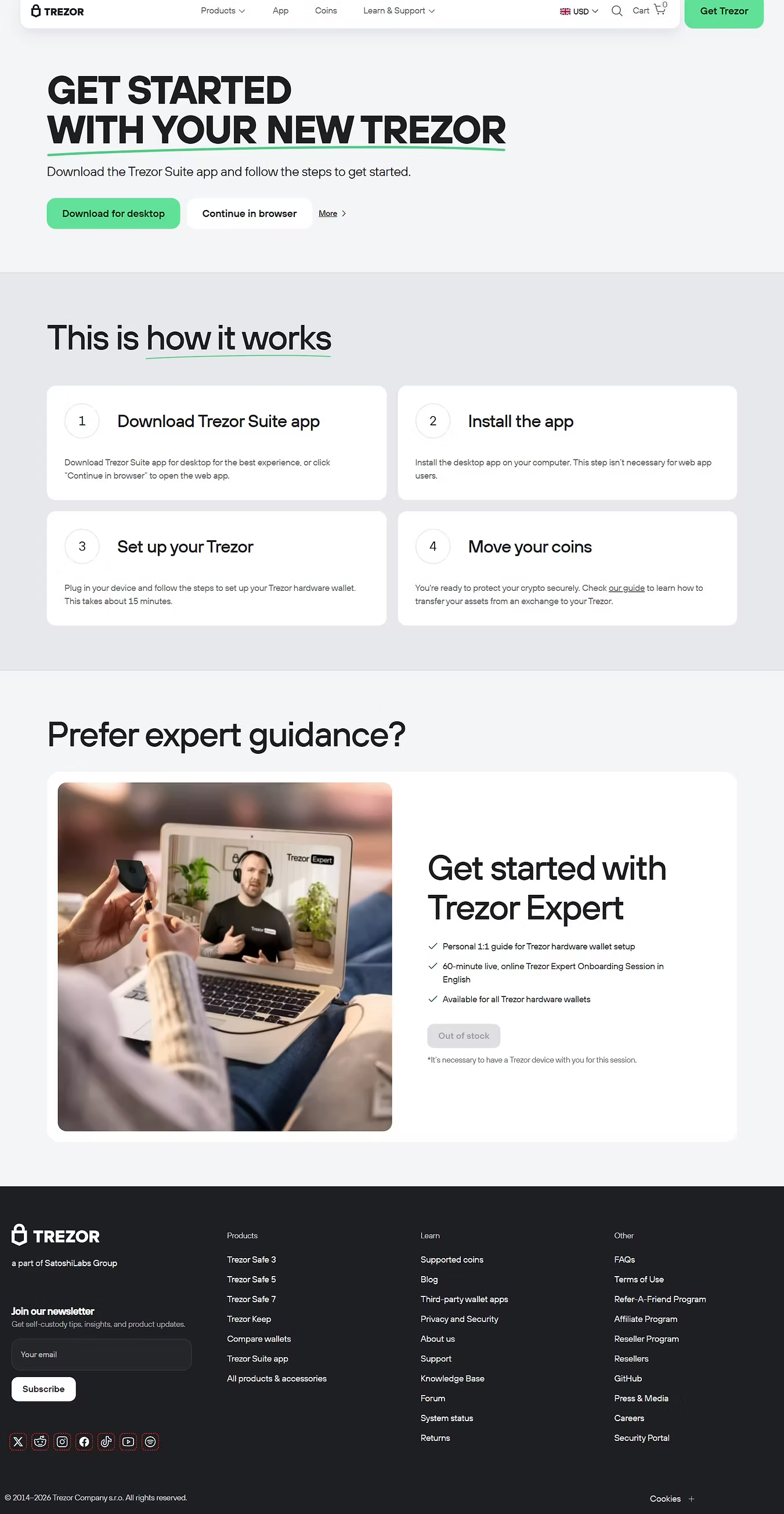
The setup process is designed to make hardware-wallet configuration easier, even for someone using a Trezor device for the first time. Trezor recommends downloading the Trezor Suite desktop application for the best experience, while a supported web option is also available.
After installing or opening the appropriate software, connect the hardware wallet and follow the instructions displayed during setup. The process can include device preparation, firmware installation, wallet creation, and backup configuration. Trezor states that the basic device setup takes about 15 minutes, although the actual time can vary.
Key Features
Guided configuration: Users receive instructions throughout the setup rather than having to figure out every step independently.
Trezor Suite: The companion software provides an interface for viewing accounts, managing supported assets, and interacting with the connected hardware wallet.
Hardware-based protection: A hardware wallet is designed to keep important wallet credentials protected through a dedicated device and reduce exposure to certain online threats.
Wallet backup options: Depending on the device, Trezor supports different backup formats, including BIP39 and SLIP39. Current supported models can use 12-, 20-, or 24-word backup configurations.
Multi-share recovery: Compatible devices can use SLIP39 Multi-share Backup, which divides recovery information into several shares and uses a chosen threshold for recovery.
Benefits of Using Trezor
One of the biggest advantages of a hardware wallet is self-custody. Users have direct control over their wallet instead of relying completely on a cryptocurrency exchange to safeguard access.
Another benefit is long-term recovery planning. A properly protected wallet backup can restore access if the physical Trezor device is lost, damaged, or reset. Trezor emphasizes that the backup is one of the most important parts of wallet security.
Multi-share backups can offer an additional benefit for users who want to spread backup information across different secure locations. For example, a threshold-based setup can allow recovery even if some individual shares become unavailable.
Trezor can also help users develop safer transaction habits. Checking important transaction details directly on the device display provides an additional verification step before approving a transaction.
How Secure Is Trezor for Crypto?
Trezor is designed with multiple security protections, but no hardware wallet can remove every cryptocurrency risk. User behavior remains extremely important.
The wallet backup must remain private. Never share it with another person, enter it into a website, save it in cloud storage, or create a screenshot or photograph of it. Trezor says legitimate support will never ask for your wallet backup.
Phishing is another major concern. Fake websites, emails, messages, and support accounts can imitate legitimate companies. Trezor recommends using official channels and downloading Trezor Suite only from the official Trezor website.
Before confirming a transaction, carefully check the information displayed on your Trezor device. This can help detect situations where information shown on a computer has been manipulated.
Frequently Asked Questions
What is Trezor.io/start?
It is Trezor's official starting point for setting up a new Trezor hardware wallet and accessing Trezor Suite.
Is Trezor suitable for beginners?
Yes. The guided setup provides step-by-step instructions, making the initial configuration easier to follow.
What is a wallet backup?
A wallet backup is the recovery information used to restore access to a wallet if the hardware device becomes unavailable.
Can I store my backup digitally?
Trezor recommends keeping the backup offline and specifically advises against digital copies such as photographs, screenshots, emails, or cloud files.
Can Trezor eliminate all crypto security risks?
No. Hardware protection is only one part of security. Users must also avoid phishing, protect their backup, use authentic software, and carefully verify transactions.
Conclusion
Trezor.io/start provides a practical starting point for setting up a Trezor hardware wallet and moving toward cryptocurrency self-custody. Trezor Suite, guided configuration, hardware-based protection, flexible backup methods, and transaction verification can make crypto management more structured and security-conscious.
The best results come from combining the technology with good habits. Keep your wallet backup offline, download software from official sources, ignore unsolicited support messages, and verify important transactions directly on your device.
Additional Resources
For further information, users can consult Trezor's official Learn, Security & Privacy, wallet-backup, and phishing guides. These resources provide additional information about self-custody, backup protection, scams, and safe cryptocurrency management.
Updated about 2 hours ago